
Nobody notices good copier paper. They notice bad copier paper: the jam halfway through a 40-page contract, the invoice that comes out faintly streaked, the ream that absorbed too much humidity and now feeds two sheets at once.
For most offices, paper is bought on autopilot. Someone grabs whatever pack is available and the printer takes the blame when things go wrong. But choosing the right copier paper UAE businesses depend on comes down to a few simple decisions and getting them right makes everyday printing noticeably smoother.
Start With the Size: A4 or A3
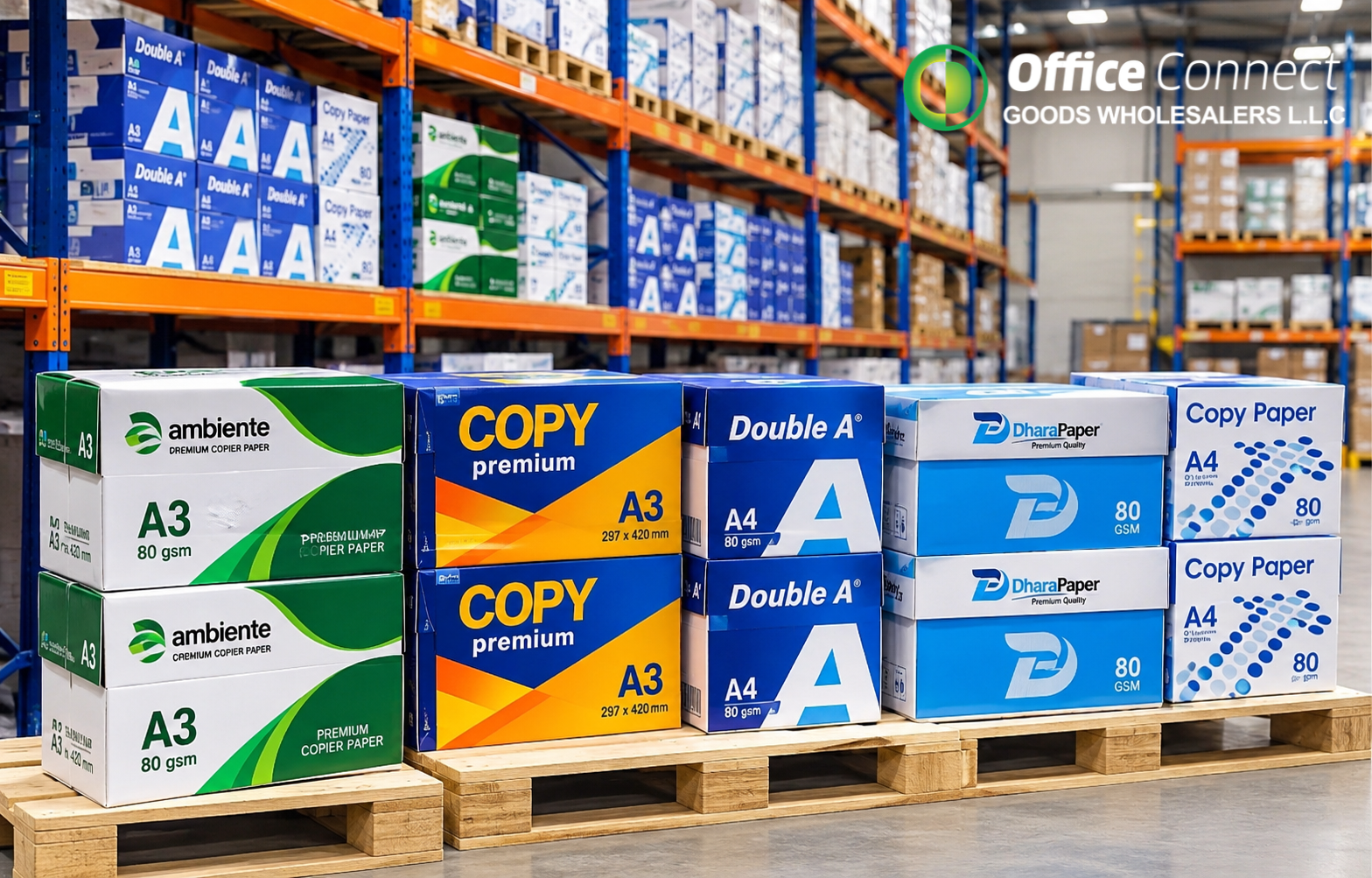
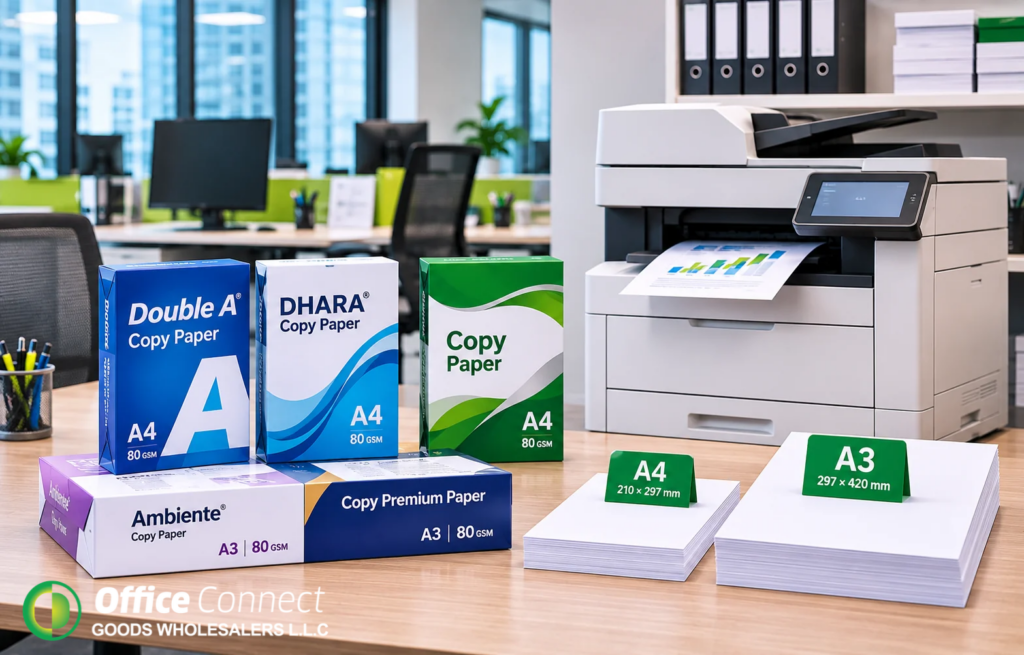
A4 copier paper UAE offices use is the default for good reason. At 210 × 297 mm, it covers letters, invoices, purchase orders, meeting notes, contracts, and the general stream of administrative documents that every business produces daily. If an office only stocks one size, this is it. A3 copier paper UAE businesses keep alongside it serves a different purpose. At 297 × 420 mm, it gives you the space for charts, diagrams, larger spreadsheets, presentations, posters, and training materials. Schools, design teams, and anyone who regularly prints at a larger format will find it saves a lot of awkward scaling and taping. Most offices don’t need much A3. But when you do need it, you need it right then, so a small stock is worth holding.What GSM Actually Means
GSM stands for grams per square metre, and it simply tells you how heavy and thick the paper is. Higher GSM feels sturdier. Lower feels lighter and thinner. 80 GSM paper UAE offices use is the everyday standard. It handles text documents, photocopying, and routine printing without feeling flimsy or adding unnecessary cost. For the vast majority of office work, it’s the right balance, and there’s rarely a reason to go heavier unless you’re printing something specific for a client.Match the Paper to What You Actually Print
Different offices have different habits, and the paper should follow. An administrative office running letters, invoices, and internal documents is well served by A4 80 GSM. A corporate team preparing proposals and client reports wants consistency above all, since a document that prints evenly reflects well on the business. Schools go through A4 for worksheets and exam papers, with A3 for classroom presentations. Teams producing technical drawings or larger charts will lean on A3. The point is to look at what your office genuinely prints, rather than ordering the same thing out of habit.Quality and Printer Compatibility
This is where most jams begin. Poor-quality paper tends to have an uneven surface, inconsistent thickness, or damaged edges, and printers respond by misfeeding, jamming, or producing patchy results. A few things are worth checking before you buy. The surface should be smooth for clean prints. The thickness should be consistent so feeding stays reliable. Your printer or photocopier should support the size and specification. And the packaging should be intact, because damaged wrapping is how moisture and dust get in. For office printing paper Dubai teams running high-volume machines, these details matter more than the price per ream.